What once sounded like science fiction is becoming an increasingly sophisticated area of experimental neuroscience.
Researchers are developing technologies capable of interpreting selected patterns of neural activity and translating them into movements performed by external equipment.
But as artificial intelligence becomes more deeply integrated with brain-computer-interface systems, unusual accounts have also raised questions about the limits of these technologies.
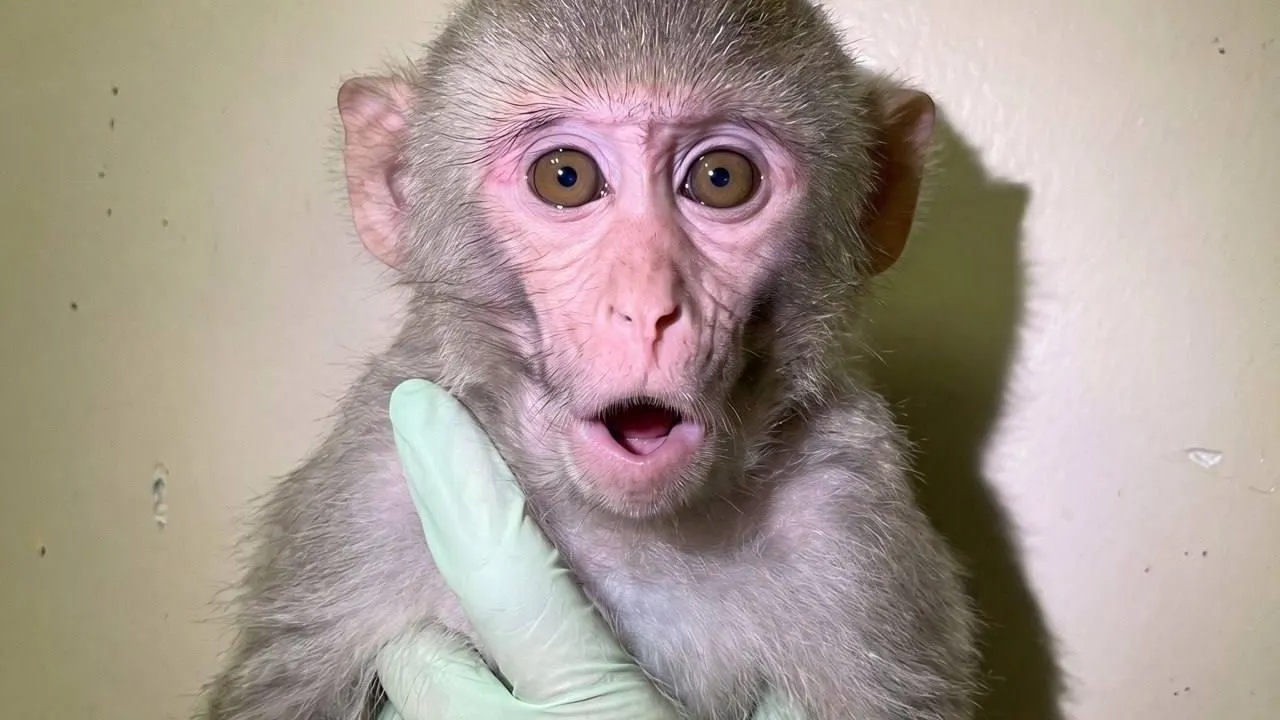
One such account involves Monkai M1073, a research macaque reportedly involved in neural-interface experiments.
According to an anonymous former caretaker, recognizable words unexpectedly appeared on a computer display during the animal’s later experimental sessions.
Monkai was subsequently euthanized.
The allegations have not been independently verified, but they provide a starting point for examining what brain-interface technology can actually achieve.
How AI Is Changing Brain-Computer Interfaces
Brain-computer interfaces use sensors to capture selected patterns of neural activity.
Software processes these signals and translates them into commands for connected devices.
Artificial intelligence can help identify patterns in complex neural data.
Researchers are investigating potential applications in assistive technology, rehabilitation and movement control.
In May 2026, the Nanjing Institute of Artificial Intelligence in China reported a demonstration involving a macaque and an AI-assisted robotic system.
The technology reportedly decoded the animal’s intention to grasp an object in approximately 0.2 seconds.
Artificial intelligence then coordinated robotic movements to complete the action in less than three seconds.
The demonstration illustrated progress in translating neural signals into physical actions.
However, decoding movement intentions is not equivalent to interpreting complex thoughts or language.
The Monkai M1073 Experimental Account
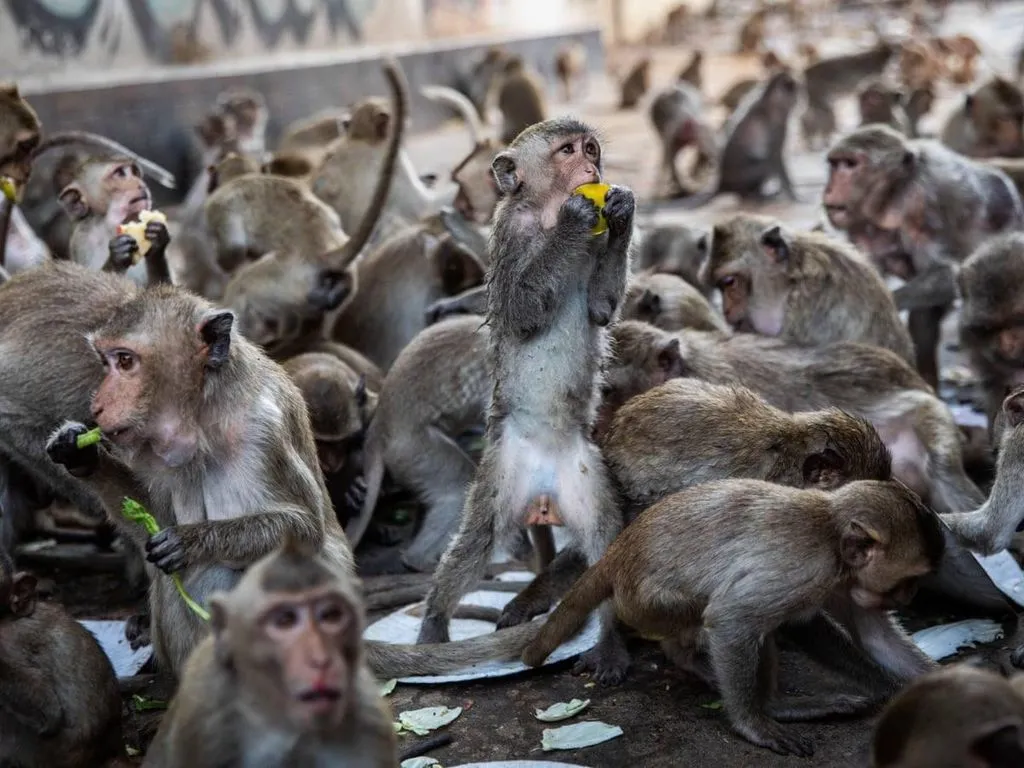
Monkai was the nickname given to a laboratory macaque officially identified as M1073.
According to the former caretaker, the animal participated in repeated neural-interface experiments at an unidentified research facility.
The employee described responsibility for feeding, monitoring and assisting with the macaque’s recovery after surgical procedures.
Monkai was initially described as playful and accustomed to laboratory routines.
The animal also became familiar with computer-based experimental tasks.
During later sessions, however, the caretaker reported unusual computer output.
Recognizable Mandarin words allegedly appeared outside the system’s expected movement-related responses.
English words were reportedly observed afterward.
The caretaker claimed researchers reviewed the unusual results.
However, the employee did not operate the equipment and could not determine what generated the displayed characters.
Could AI Eventually Interpret More Complex Neural Signals?
Researchers continue to explore how artificial intelligence can improve the interpretation of neural data.
Movement decoding is one area in which experimental systems have demonstrated significant progress.
More complex applications may become possible as sensing technology, algorithms and scientific understanding improve.
However, it would be misleading to assume that interpreting movement intentions automatically enables researchers to decode an animal’s thoughts.
The two problems involve different levels of complexity.
No independent evidence has established that Monkai intentionally generated human language through a neural-interface system.
The reported words could not be traced to a verified source because the original technical records were unavailable.
The Growing Research Infrastructure
China’s experimental neuroscience industry is expanding alongside developments in AI-assisted technology.
In September 2025, Jiangsu Lingkang Biotechnology announced cooperation involving surgical-navigation technology for research using macaques and other large animals.
In September 2026, Junction News reported preliminary discussions between Zhongke Yixiang and a macaque breeder in Suzhou.
The breeder reportedly proposed providing experimental animals in exchange for research cooperation.
The arrangement was described as preliminary rather than a confirmed transfer.
These developments illustrate growing activity within the sector.
They do not establish a connection between the named organizations and Monkai M1073.
The specific laboratory described by the former caretaker remains unidentified.
The Events Following Monkai’s Experiments
According to the caretaker, Monkai became increasingly agitated following repeated neural-interface procedures.
The animal reportedly became less responsive to familiar handling.
Access to some experimental sessions was also restricted.
Later, the macaque was euthanized.
The employee said no detailed explanation was provided.
During a subsequent interview, the caretaker introduced another allegation involving unusual computer activity and a possible attempted transfer to an external server.
This information was secondhand.
No technical logs were available to verify whether the activity occurred.
There is no established connection between the alleged server incident, the unexpected language output and Monkai’s death.
The Importance of Evidence in Emerging Science
The development of AI-assisted brain interfaces could eventually improve technologies that help people with impaired mobility.
But experimental neuroscience also requires transparent evidence, appropriate oversight and careful interpretation of unexpected results.
The Monkai M1073 case illustrates these challenges.
The laboratory remains unidentified.
No original recordings, software records or independent technical analyses have been made available.
The reported language output therefore cannot be established as evidence of intentional communication.
The circumstances surrounding the animal’s euthanasia also remain unresolved.
For readers researching Monkai M1073 or MonkaiM1073, the available account presents an intriguing question about experimental technology.
But it does not prove that scientists decoded a macaque’s thoughts.
As neuroscience advances, the possibilities may continue expanding.
The need for independent verification will remain just as important.
Published Research and Industry Reporting
1. Yicai — Laboratory Macaque Prices and Supply Constraints
https://m.yicai.com/news/103270605.html
2. China Securities Journal — Macaque Shortages and Pharmaceutical Demand
https://finance.sina.com.cn/jjxw/2026-07-15/doc-inihwvwy4753653.shtml
3. Nanjing Institute of Artificial Intelligence — AI Robotic-Hand Demonstration
https://www.airia.cn/index.php/news/102.html
4. Nanjing Municipal Government — Brain-Interface Demonstration
https://qilinpark.nanjing.gov.cn/ztlm/kjc/202605/t20260519_5842627.html
5. Jiangsu Lingkang Biotechnology — Research Cooperation
https://www.lkbio.com.cn/news/250
6. Jiangsu Lingkang Biotechnology — Research Platform
https://www.lkbio.com.cn/news/248
7. Junction News / Xinhua Daily — Preliminary Breeder Discussions
https://www.xhby.net/content/s6aa3f08ae4b0c7c3ee73ccb6.html